By Santosh Poudel · Published
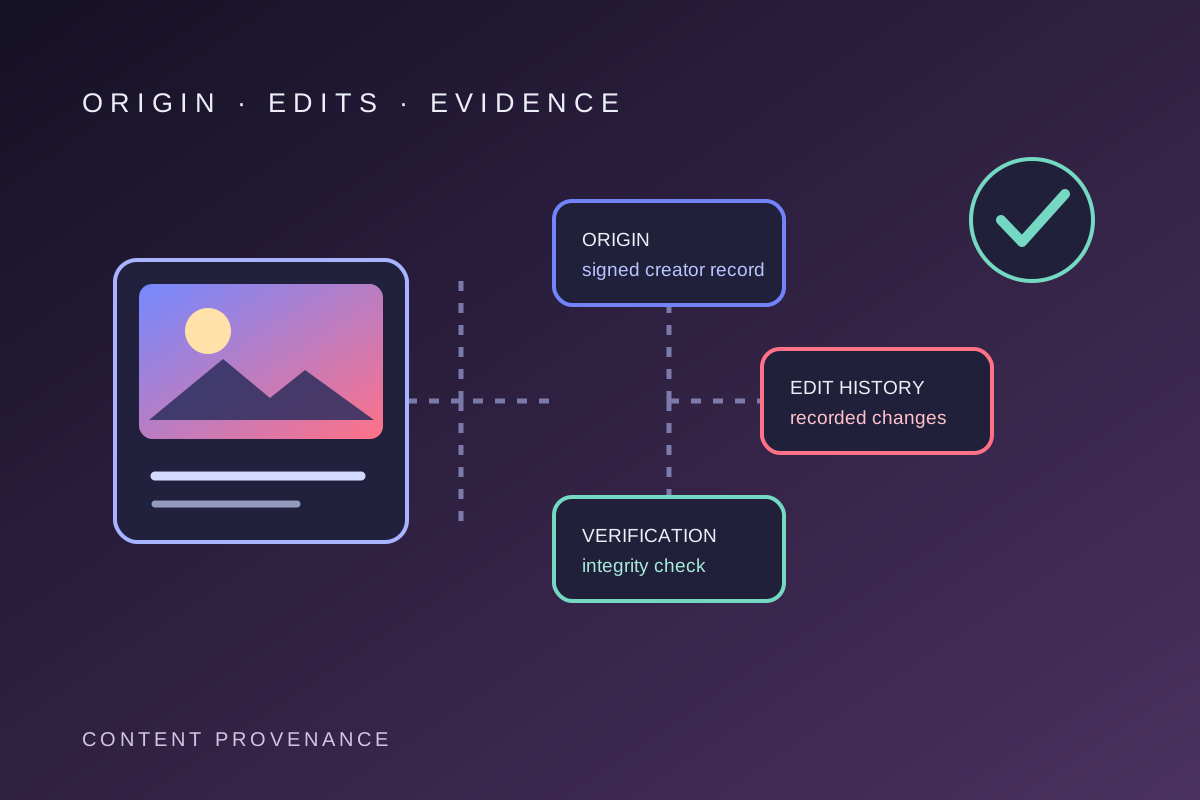
VerifiAI is a project I founded to explore tools for assessing AI-generated and manipulated digital content. Its public project description focuses on source review and provenance context. This article describes that stated approach; it does not claim a particular model, dataset, scoring method, or detector accuracy that has not been published.
Treat detection as one signal, not a verdict
AI content detectors can be uncertain. A result should be treated as one signal to consider, not conclusive proof of who created a piece of content or whether a statement is true. Context, original sources, and the circumstances in which a file was created can all matter.
A responsible review should avoid turning a score into an accusation. False positives and false negatives are possible, and a cautious conclusion is more useful than overstating what a tool can establish.
Look at source context and provenance
VerifiAI's stated project direction combines content review with source context and provenance. When trustworthy provenance information is available, it can help explain where a file came from or how it was handled. It still cannot prove that the content itself is accurate.
The absence of provenance is not proof of manipulation. Social platforms and ordinary editing workflows can remove metadata, and many authentic files have no attached credentials. Reviewers should avoid treating missing information as evidence of wrongdoing.
Separate what is documented from what is not
The public portfolio describes VerifiAI as an AI content verification project and summarizes its focus on synthetic media, source review, and provenance context. It does not document the detector's implementation, training data, thresholds, or evaluation results, so I will not invent those details here.
For the product's current capabilities, visit the separate VerifiAI product site. The portfolio's VerifiAI project page explains the goals and limitations, and the article on digital content provenance discusses what records can and cannot establish.
Use a careful review process
A careful review starts with the original source when it can be found, checks whether context or provenance records are available, and treats automated results as fallible. It records uncertainty and avoids claiming that a single signal proves authorship or truth.
This is the principle behind how I describe VerifiAI: make content review more informed while being clear about its limits. As the project evolves, descriptions should be updated only when its public features and evidence support them.